
Submissions
Thoughts on submitting writing and publishing

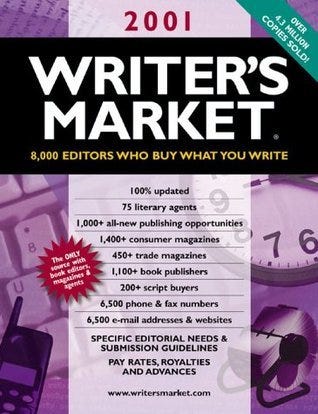
My introduction to the concept of submitting writing came early. I was eleven, attending a summer workshop for elementary school students. On some days, we’d take a bus to visit a bookstore or the conservatory or a little junk store. But most of the time, we were in a small classroom at a large school, just writing and reading and talking about stuff. This was the early 2000s: The computers were bulky; I had a yellow floppy disk my dad had given me to save all my files. The teacher—a man who looked like Santa Claus and went by “Word Man”—showed us a large book one day, that listed publications. I’m assuming (I can’t remember) that it was Writer’s Market.
It’s so odd to me, now, that we talked about any of this, even though we only talked about it in passing. We were about to start sixth grade. The boy next to me wrote exclusively about Ewoks. I was working on a fantasy novel about people who lived in the clouds. When I remember one of the girls I befriended that week, Margaret, the images that spring to my mind are of bunnies and flowers. My main concern each day was whether to spend the change I had for the snack bar on Vanilla Coke (new that year) or Cherry (a classic).
I had the vague sense that submitting was a thing we would do, in the future, at some point: mail our writing off to these places. But it seemed strange and far away. I had to finish a book first.
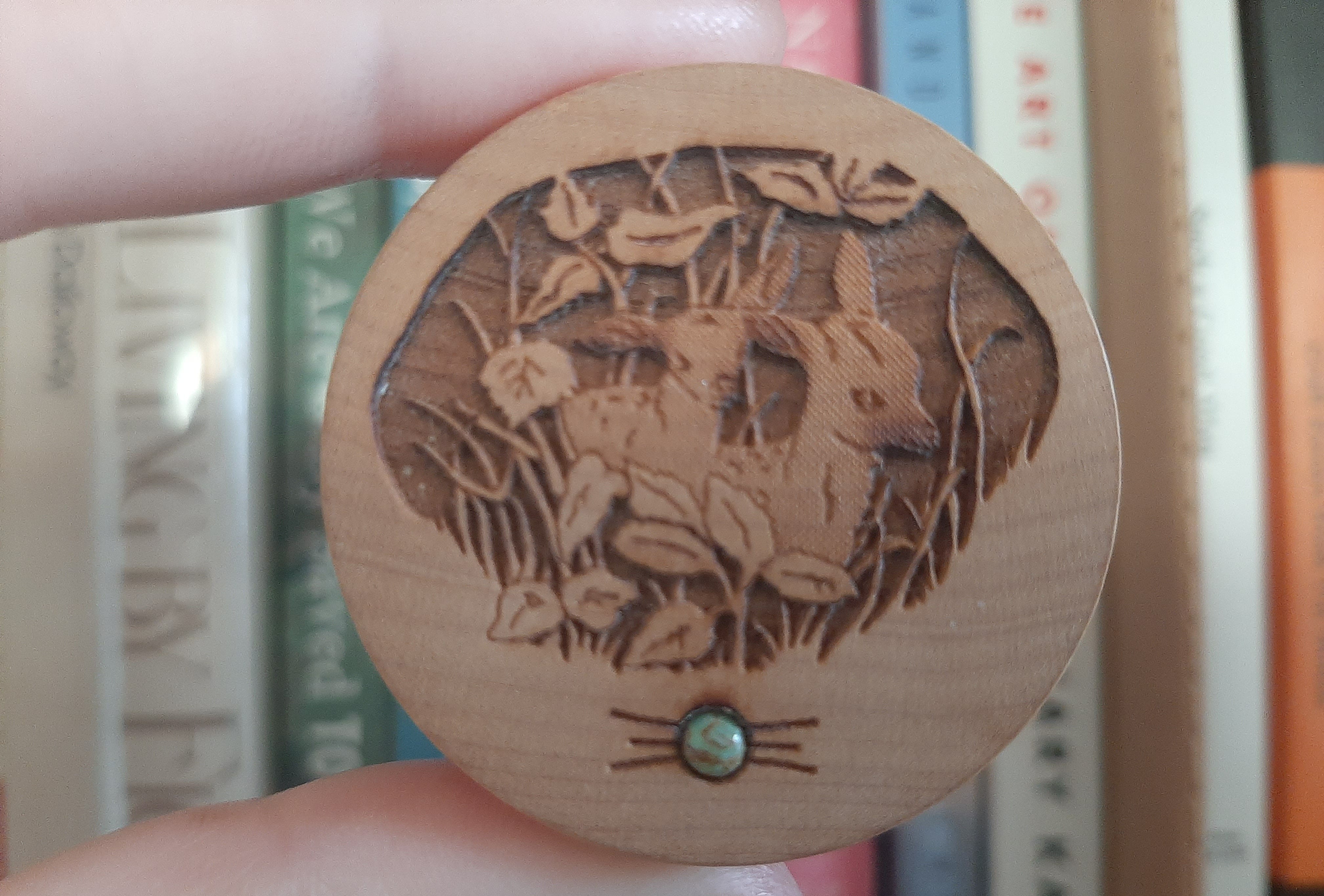
Not that publishing wasn’t something on my mind. The summer before, on a family trip to the Black Hills in South Dakota, I’d purchased a round wooden box the size of a wafer at a gift shop in one of the parks. A dream box, according to the sign—you were supposed to write a wish and place it inside. And this is what I wrote about. I was very careful with the wording. I didn’t say that I wanted to write a story or a poem or a book. Or even that I wanted to publish something (because maybe I would become an editor and publish someone else’s writing.) I wrote specifically that I wanted to “publish a book that I wrote” (vague on the nature of this book because who knew if it would be poetry or a novel—my ten-year-old self was flexible on that front.)
I wrote this on a scrap of paper and folded it into the box, which had an engraving of deer on the front and a little green stone. And then I went back to writing things and didn’t give the practicalities of submitting another thought until college.
Slow and contained
By the time I graduated high school, I had not gotten anywhere close to finishing a book, but I had written some poems and a short story or two, and I knew, vaguely, that these could be submitted to journals and magazines for publication.
Submissions, at that point, had largely shifted online. The process—for anyone who has not submitted before—mostly looks like this: Journals have a submission page that explains their criteria and provides a link to their online submission manager. You input your contact information, write a short cover letter (or not), and upload the file with your submission. Often, you pay a small submission fee (around $3). And then—you wait.
But for my first couple years of college, I didn’t do any of this. I submitted, instead, to the one undergrad literary journal on campus, and then, later, to a second and third undergrad journal that had emerged. All three of these journals were completely internal: publishing only Notre Dame students and circulating in hard copy on campus. During my senior year, one of my former classmates started an online publication with another guy, and so I submitted one short story to that—though I can’t remember what this process was, just that I felt momentarily cool and in the know, though I knew nothing of what was actually happening behind the scenes. I’m pretty sure “submitting” is a generous description; I think I just emailed the story to him, and then it appeared, with some descriptions above it that sounded way more artsy than anything I would have come up with.
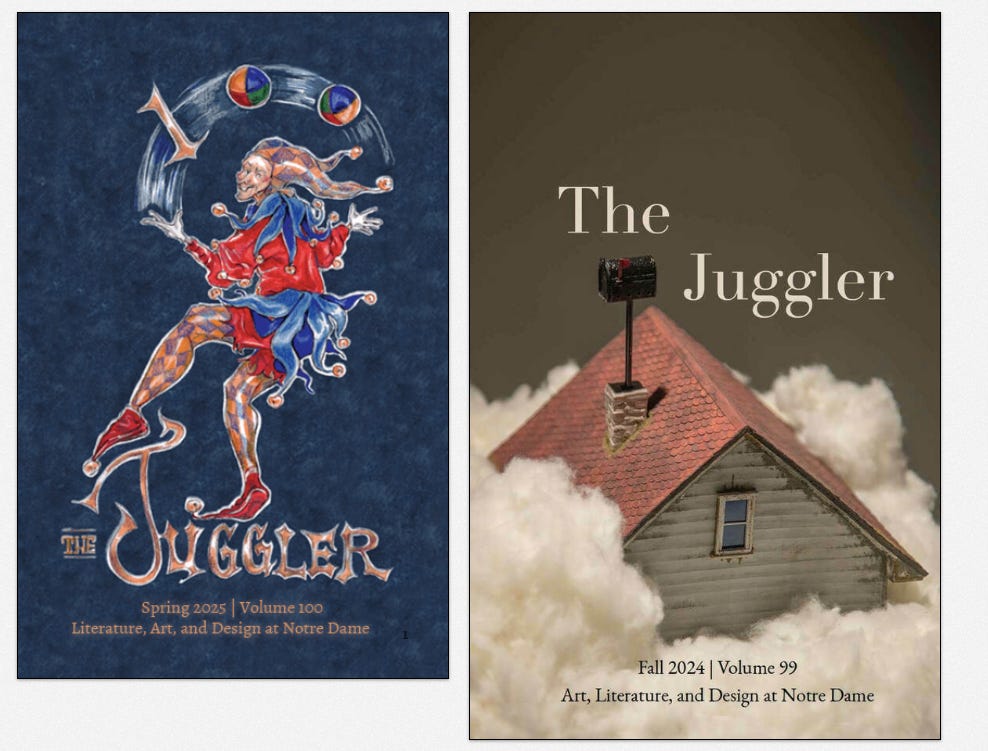
In any case, all of this was, in a word: slow. Or, perhaps, a better word: contained. The pool of journals on campus was limited, and you could submit only once a semester. And then you waited. First to hear, and then for the publication to come out.
So submitting and publishing occupied some corner of my brain—but for a very limited amount of time.
The same was true when I started to submit to journals outside the bubble of campus. These journals (what I thought of as “the real journals”) took months to respond. By the time they did—with the inevitable rejection—I usually looked at the story in question, thought better of it, and moved on.
Over time, I had stories that I was more persistent with—but even then, the process moved at a snail pace. I’d submit one piece, wait, and ultimately forget about it until the rejection arrived months later.
The life of a short story
To fully illustrate just how slow this process was—or at least how slow it was for me—here’s an example of one short story.
2018-2019: Draft and workshop story
2020-2021: Tinker with story and/or forget about it (Who knows. Blame the pandemic.)
Spring 2022: Redraft story
June 2022: Submit to 2 journals
August 2022: 2 rejections (speedy!)
June 2023: Submit to 2 journals. Never hear from one; get rejection months later from the other.
Fall 2023: Make minor revisions. Workshop beginning. Submit to a contest. Get rejected. Set it aside.
March 2023: Submit to 6 journals
Fall 2024: Rejections (1 tiered!)1 Workshop the story again. Revise. Decide it was better before the revisions. Tweak a few sentences and scenes but mostly keep it the same. Submit to 3 journals
February 2025: Rejections
Spring 2025: Sporadically submit to 4 journals. Get rejections from 2.
Summer 2025: Query one journal from November that still hasn’t responded. Receive no response to email. Eventually receive a form rejection.
Fall 2025: 2 submissions still active. Decide to stop submitting—let this one go.
There are two parts to this timeline that I want to emphasize. I imagine what stands out is that this is a lot of rejection and time, all for a story that seemingly comes to nothing. But the other part I want to point out is the pace of this—the long gaps between the rejections and revisions and resubmissions. Of course receiving rejections does not feel good. But I also wasn’t thinking about the submission process all that much during this time. I was working on other writing—a lot of other writing. Mostly other writing. This story was such a small, small part of my writing life during these years. Other than the times when I workshopped and revised, I often wasn’t thinking about it all.
I did, eventually, in my post-college years, have one story accepted—one. I submitted it to at least ten places, probably more, with one tiered rejection. I started submitting in 2013; it was published in 2019—six years of submitting.
Two different outcomes, but it’s the same narrative for both of these stories: a long arc from start to finish. In many ways, I was doing submitting “wrong” during this time, with no logic to how many journals I submitted to at a time or really what journals I chose. I ought to have resubmitted to new journals immediately after getting rejections—instead, I doubted the pieces and considered letting them go, only to resurrect them months later. But the result was that my attention to the submissions themselves was minimal—they existed in the background for most of this time, allowing other, newer writing to take center stage.
Everything all at once
Fast forward to the end of the MFA.
I didn’t submit much during the program. I was mostly focused on the novel, and so I didn’t have much that I could submit, other than the story above and one other, with a nearly identical timeline.
But by the time I graduated, stories that I’d started drafting during the first year of the MFA were finally polished and ready to send off. I’d also taken a CNF course in the final spring semester, so I now had three short memoir pieces that I felt were ready too. And then, after spending April and May generating new writing with my classmates, I suddenly had a handful of poems and microfiction I was considering submitting as well—pieces that had taken far less time to write, but that I nonetheless felt good about.
At the recommendation of my classmates, I started using ChillSubs, a database of literary journals, to research publications. This was something I hadn’t done before. In undergrad, I submitted mostly to journals I’d already heard of—which is to say, the journals I was least likely to get published in, because the ones I was familiar with were often better known and harder to get into. In more recent years, I’d used a scattershot approach, googling and word-of-mouth and looking up universities to see if they had literary journals. Now, browsing through ChillSubs, I started finding a wider range of publications. I was filtering the database to find ones that were reputable, but not quite so out of reach.
I could also find which journals didn’t charge submission fees—or when they offered free weeks at the beginning of a month.
I started reading some of the online journals, and then skimming the bios of writers of pieces I liked to see which journals got referenced repeatedly.
I started submitting a lot of things, a lot of places.
I’d long had a spreadsheet for tracking submissions, but what had once been a single sheet suddenly had over 15 tabs. By June, instead of submitting 1-2 stories to a handful of journals at a time, I was submitting: 5 short stories, 3 nonfiction pieces, around 10 microfiction/nonfiction pieces, and 5 poems to. . . however many journals. Sometimes more than 30 in total. The number was always shifting because the responses for the online publications, especially for microfiction, were much faster than I was used to.
Some of the publications responded in a few days. Many in a matter of weeks. And I could predict when they would respond because ChillSubs had data on all this, so my spreadsheet told me when to anticipate responses too.
I’d gone from submissions occupying very little of my brain to it occupying. . . quite a lot of it. Quite a lot of the time.
I was used to having silence from publications for months, so it was strange, now, to suddenly get regular responses.
I got a lot of rejections. (By my current count—51 this year.)
But I also got more tiered rejections—and these were easier to spot, since I was submitting (and resubmitting) to the same places. I got a couple of (brief) personal notes.
And then some acceptances.
Which was exciting and good—but did not slow anything down. After an acceptance, there was a brief flurry of activity—the response to that acceptance and the withdrawals to the remaining submissions—and then the waiting for the publication to come out.
This kind of waiting did not feel still. Some of the publications had specific dates, some didn’t. But in either case, it was the kind of waiting that took up mental space. And that space was starting to feel quite full.
Pause
I wish I was the kind of person who could send these submissions off, and set all thoughts about them aside. But I can’t. I know which ones should have a response soon. I know which ones I could, if I wanted to, query about right now. And which ones are still scheduled to be published, down the line.
The speed and the volume of these submissions makes it feel similar to the internet or social media, like another bombarding thing that I have to work to turn off in my mind.
This isn’t a complaint—just a realization of the cost of choosing to submit. Because submitting writing is, in the end, a choice. I have classmates who have decided, with a good deal of intent, not to publish. Or to put a pause on publishing, for right now. They have their own reasons, but it’s not hard to list several. To focus on craft, to develop voice—to purposefully not make the busy-ness of it all a part of one’s practice.
I don’t regret the burst of submissions from this spring. I’m happy that I have some pieces out in the world—that I got to share some writing with people I know and people I don’t. And I know that the publications came because I submitted in this way: with a wider net, cast in a more thoughtful direction.
But I also think I’m going to pull the net in for a time. I’m going to let the present submissions sit out there and get their responses—but until they do, I’m not going to keep adding new ones to their number. I’m going to pull the plug on my two oldest stories and the remaining microfiction and poems. I want the volume of submissions to decrease. I want the pace to slow down again.
When my imagination drifts off during a walk, I want it to wander to character and plot and scene in the novel, rather than the submissions awaiting answers. I want to think about what I’m writing now, rather than what people might be thinking as they read a published piece.
I still have that little box from the Black Hills—I still have that desire to “publish a book I wrote” or really just “publish a story or poem I wrote.” I think that the good part of that desire lies in what stories are for, what they were first for: sharing with other people. You write something; you want someone else to hear it. Publishing isn’t the only way to do that—it might not even be the best way—but it is a way, and in our modern world, it’s certainly a good way, the main way. I’ve read some wonderful things this year, from people I will never meet, because of it.
But when I try to think about why publishing mattered to a child, I think that she really didn’t know. She just knew it was a thing to want.
I know that nestled in that box, next to the scrap of paper, is a small object from one of the junk shops we visited during that summer writing workshop. An insignificant item: It cost less than the Vanilla Coke I bought later that day, but we were supposed to find something related to our stories, and this was what I found. I decided it was a magic object, so I placed it inside, to remind myself of the fairies that lived in the clouds in my story. I won’t say what the object is—not because it is special, but because it isn’t. It is so completely ordinary, and I want to preserve a sense of what I imagined it to be. I don’t even remember what role it was supposed to play in the story anymore—just that this was a time when I was looking for the fantastical everywhere, when it was easy to live in the world of my story because I lived in it all the time.
I like that this object exists next to the statement about publishing—that even as I chose to wish the least magical thing there was about writing, I placed this talisman alongside it. How many times since then have I thought to discard the object or the scrap of paper or the entire touristy little box—all of them silly and childish, for different reasons. But I didn’t, and there they are, sitting just above my desk, reminding me of something. I’m not always sure what.
Responses to submissions are typically form letters, but there are levels or “tiers” within these responses—a higher tiered rejection might say that your submission came close or simply encourage you to submit again. Occasionally (even better) you might get a personalized note at the end. Best practice when you receive these (I’d been told) is to submit another piece of writing to the same journal right away (because maybe your style/aesthetic is a good fit for the journal, and something was just not quite there with the last piece.) But on the rare occasion this happened to me, during these years, I didn’t have another story ready to go. So it was nice and encouraging to get a tiered rejection—but nothing I could really act on.
I appreciate this insight into the world of submissions as a newer writer. Thank you for sharing your experiences!